Direct Marketing
Direct Marketing can be crucial in collecting and utilizing 1st party data
Preamble
Establishing a relationship between brands and consumers is becoming significantly more complex due to the imminent decline of third-party cookies and the ongoing abandonment of mobile advertising identifiers (mobile ad IDs).
In this context, the focus shifts to 1st party data, which essentially leads to better performance in digital marketing – otherwise, we wouldn't be talking about them. Among all the channels of digital marketing that can utilize 1st party data, direct marketing boasts the highest conversion rate while also being top-ranked in terms of cost-effectiveness.
When we combine 1st party data and direct marketing resources, we see why DMK (Direct Marketing) can be a viable solution that shouldn't be missing from the arsenal of digital solutions.
Disappearance of 3rd party cookies
It can be said without exaggeration that 3rd party data has been essential so far in the digital advertising ecosystem. As interest in privacy and control over personal data has grown, there has been a regulatory consensus that 3rd party data will be used less and less by major platforms.
In May 2023, Google Chrome announced that it would no longer support the use of 3rd party cookies (Apple's browser - Safari had already announced this). The timeline suggests that the disappearance of 3rd party cookies will be complete in the third quarter of 2024.
Defining the terms
What 1st party data can contain
1st party data can include various user information, such as:
- Demographic data (age, gender, location, etc.)
- Contact information (phone number, email address)
- Website/app interactions
- Order history
- Preferences set in the account
- Email interactions (opened emails, clicked links, orders), subscription data
- Conversions from social media platforms
- Customer feedback
- Transcripts from online chat conversations
How to obtain 1st party data
1st party data can be collected for free, assuming user consent in accordance with GDPR regulations. The most common methods include:
- Using a tracking pixel on the website and social networks
- Using direct methods - surveys, newsletter pop-ups, forms, online chat discussions, testimonials, reviews
- Newsletter subscriptions
- Creating an account
- Offline events and activities
- Loyalty programs and rewards
Advantages and benefits of using 1st party data
- Personalized experience - through segmentation, you can send personalized communications, display products of interest on the website, and target users with personalized ads
- GDPR compliant - you own the data, and customers agree to provide their information during the ordering process
- Omnichannel marketing possible - the more you know about your customer's preferences, the more effectively you can define the buying journey across multiple marketing channels
- Improved data attribution - you know exactly which methods you used and the accuracy of your data
- You can segment them and collect only the information that interests you, without requiring post-collection treatment
- Time relevance - by collecting 1st party data, you know their temporal relevance
- Cost-benefit efficiency - once collection processes are defined, the efficiency of collecting 1st party data greatly increases
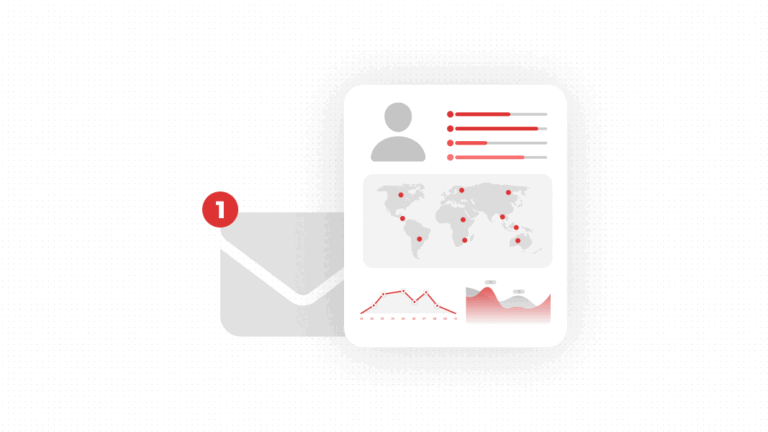
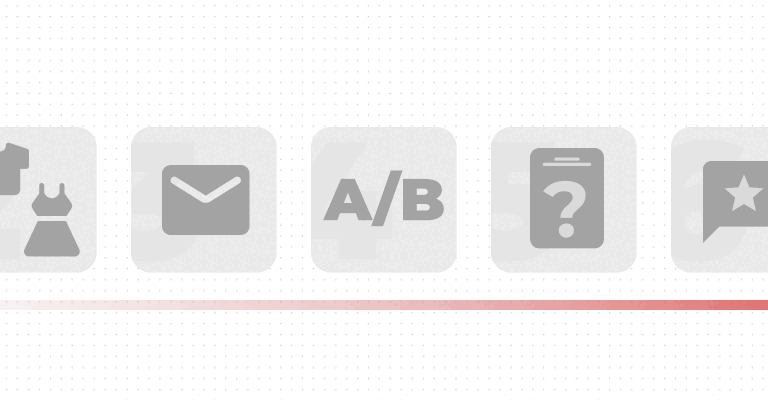
The role of Direct Marketing in collecting and using 1st party data
First step
Collecting email addresses, names, surnames, and additional information (phone number, gender, etc.) through subscription forms.
The email address has become a universal unique identifier. Specifically, all customer identification data can be recognized and associated with an email address.
Second step
Using preference forms sent via email to those who have subscribed.
After subscribing, you can ask users about their preferences (e.g., receiving emails about men's clothing promotions once a month).
Use-case:
Chief Marketing presents a case about a company that produces various containers for beverages - BrüMate.
BrüMate learned subscribers' beverage preferences by asking "What's your drink?" and customers responded by clicking on a specific link corresponding to their preferences. Clicking the link automatically updated information in the individual subscriber's profile, directing them to the category page on the website that best matched their chosen preference. Based on this updated profile information, BrüMate's Direct Marketing agency could create segments for further personalization through email marketing. More details can be found here.
Third step
During ongoing communication activities, analyze email subjects and content:
- which ones are most interesting
- what type of content gets the best reactions
- on which days customers are more likely to open emails, access content, and ultimately make purchases
Fourth step
A/B testing can be used to discover which types of products generate interest (those with the most views/clicks).
For example, products with low average prices versus those with high average prices, products from different categories, or types of promotions that are more interesting (percentage discounts vs. fixed amounts, benefits based on a purchase threshold, free shipping vs. gifts, etc.). All this information helps you better understand your customers and adjust your commercial offerings accordingly.
Fifth step
Sending out questionnaires. On one hand, you can investigate why customers abandoned the checkout process, and on the other hand, you can include post-purchase questionnaires about their experience. Or, for inactive customers, you can formulate questionnaires to inquire about their reasons, and more. With the help of these questionnaires, you can obtain qualitative data that will help you learn more about users' experiences, preferences, and what they want to buy or find on your website. Furthermore, with the help of questionnaires, you can complete the information you lack about your users (phone numbers, gender, etc.).
Sixth step
Collecting product reviews and testimonials from customers.
Asking customers to share opinions and evaluations of products or services - these can be in the form of written texts, star ratings, photos, etc. - This type of communication has multiple possible objectives:
Informing potential customers: Reviews and testimonials provide an objective perspective on products or services, helping potential customers make informed purchasing decisions.
Building trust: Customers often rely on other buyers' experiences to form opinions about a product. Positive reviews can strengthen trust in the brand and satisfaction potential.
Feedback for improvements: Negative reviews can provide valuable information to the company about areas that need improvement in products or services.
Boosting online visibility: Positive reviews can enhance a company's online reputation and help increase visibility on search engines.
Establishing customer relationships: When companies respond to reviews and testimonials, they show they are open to feedback and want to maintain a positive relationship with customers.
Seventh step
Setting up and implementing a loyalty program is an essential method for collecting 1st party data.
An online store's loyalty program is a marketing and customer retention strategy aimed at encouraging customers to return and continue shopping at the store. This type of program can take various forms and offer diverse benefits to customers, but most importantly, it works. A study by McKinsey shows that loyalty program members are 59% more likely to choose a brand over a competitor and 43% more likely to make repeat purchases.
In conclusion
Data Marketing has undeniable advantages in the quest for collecting 1st party data, but efficiency and results come when there is an integrated approach to direct marketing within the broader context of the digital strategy. When data forms the basis of a digital marketing approach, the chances of achieving results beyond expectations greatly increase.
If you need assistance in collecting and using 1st party data for your business, get in touch with the direct marketing team at hello@datarevolt.agency.
More resources, here:
How to collect first party data - Sendgrid
1st party vs. 2nd party vs. 3rd party - On audience